inquiry@harnesstechniques.com


inquiry@harnesstechniques.com
91-8390879786
When an appliance fails, most people blame the compressor, motor, or PCB. The real culprit is often the invisible hero inside: the wiring harness. For OEMs, choosing the right appliance wiring harness manufacturer in India can be the difference between smooth production and endless service calls. Harness Techniques (I) Pvt. Ltd. focuses on exactly that gap. The company designs and manufactures reliable, custom appliance wiring harnesses for Indian and global OEMs that care about safety, quality, and long‑term performance.
Contact Us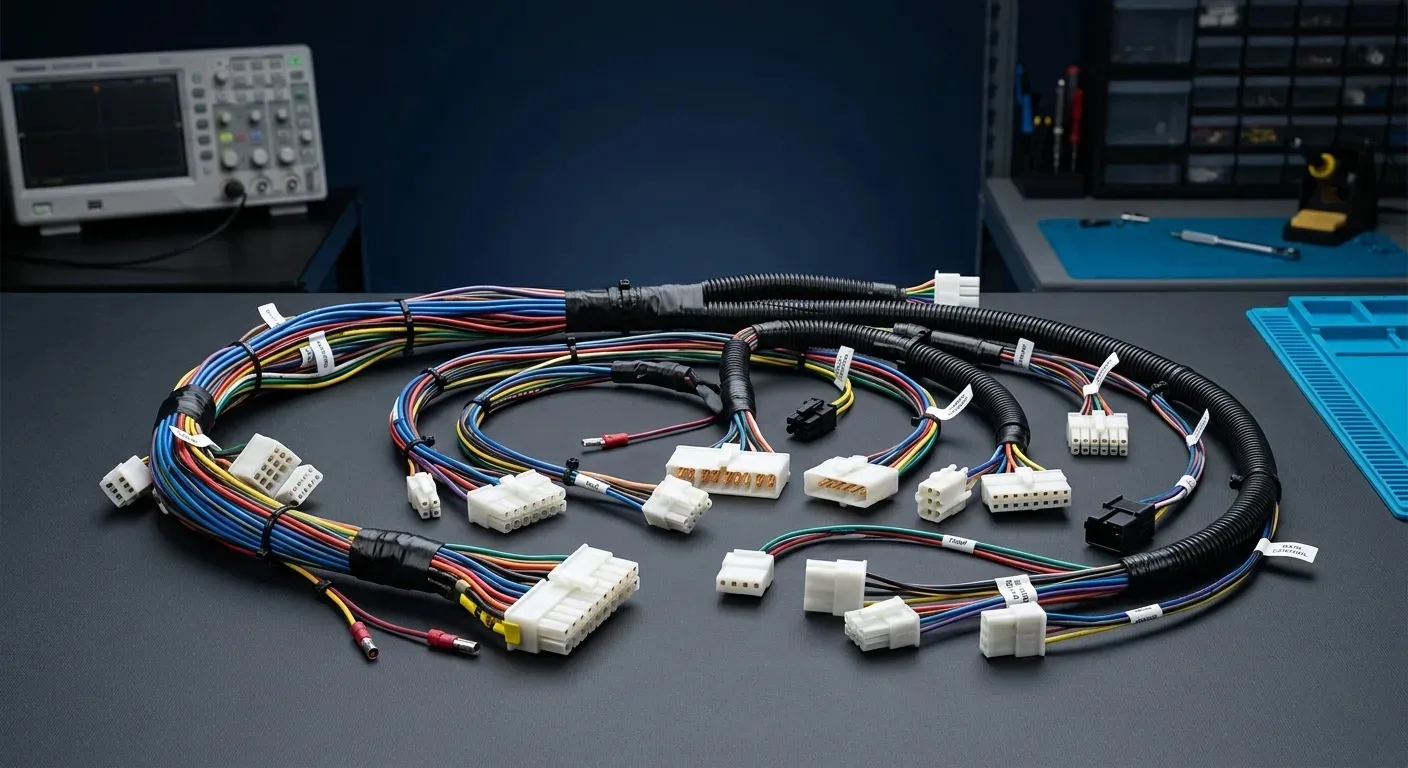
An appliance wiring harness is a bundle of wires, connectors, terminals, and protection sleeves that carries power and signals inside appliances.
Instead of loose wires criss‑crossing the cabinet, the harness keeps everything organized, labelled, and securely terminated so the appliance runs safely and consistently over its entire life.
Inside a refrigerator, for example, the harness links the thermostat, compressor, fan, lighting, and control board in a neat, routed assembly. The same logic applies to washing machines, air conditioners, microwave ovens, dishwashers, and water heaters — all of which rely on stable electrical connections to operate reliably.
OEM buyers look for three things: safety, consistency, and delivery reliability.
A wiring harness failure can cause nuisance breakdowns at best and serious safety risks at worst — including short circuits, overheating, or electrical fires.
India's appliance and electrical markets are growing quickly, and OEMs increasingly prefer local partners who understand global standards and Indian operating conditions.
A specialised appliance wiring harness manufacturer in India like Harness Techniques combines domestic manufacturing with knowledge of UL, IEC, and RoHS requirements, which helps OEMs meet export and compliance goals.
Every harness is engineered to prevent short circuits, overheating, and electrical fires under real-world operating conditions.
100% electrical testing on every outgoing harness ensures zero mis-wirings or insulation faults reach your production line.
Structured manufacturing and jig-based assembly keep lead times predictable — critical for OEM production schedules.
Harness Techniques (I) Pvt. Ltd., based in Vasai, Maharashtra, has built its reputation as a manufacturer of wiring harnesses, wire harness assemblies, and custom cable assemblies for appliances and other electrical applications. The company supplies wiring harnesses to OEMs across sectors, combining design support, manufacturing, and inspection under one roof.
On marketplace and company profiles, Harness Techniques appears as an established exporter and manufacturer with experience in appliance wiring harnesses and related assemblies. This long‑term presence matters to B2B buyers because wiring harness sourcing is usually a multi‑year decision, not a one‑time purchase.
| Parameter | Details |
|---|---|
| Company Name | Harness Techniques (I) Pvt. Ltd. |
| Location | Vasai, Maharashtra, India |
| Specialisation | Appliance wiring harnesses, wire harness assemblies, custom cable assemblies |
| Target Market | OEMs across appliance and electrical sectors (India & Global) |
| Standards Supported | UL, IEC, RoHS |
| Wire Options | UL-approved wires, RoHS-compliant materials |
| Testing | 100% continuity, pull-out, insulation resistance, visual inspection |
| Service Type | Custom OEM Partner — design support, prototyping, bulk manufacturing |
Harness Techniques designs appliance wiring harnesses for a wide range of household and commercial equipment. Typical applications include refrigerators and freezers, washing machines and dryers, air conditioners and HVAC equipment, microwave ovens and other kitchen appliances, water heaters and dishwashers.
These appliances face heat, vibration, humidity, and frequent on/off cycles. The harnesses must handle all of that without loose connections, insulation damage, or signal interference — which is why material selection and design play such a big role.
A dependable appliance wiring harness manufacturer in India does not treat wire as a commodity. Harness Techniques uses high‑quality copper conductors, heat‑resistant insulation, and vibration‑resistant terminals to ensure stable power flow and long‑term performance in appliances.
These details may look small on a drawing, but they strongly influence service life and warranty cost for OEMs.
These details may look small on a drawing, but they strongly influence service life and warranty cost for OEMs
While each OEM project is unique, appliance wiring harness manufacturing usually follows a structured process. Harness Techniques applies this process to appliance harnesses to keep quality high and lead times predictable.
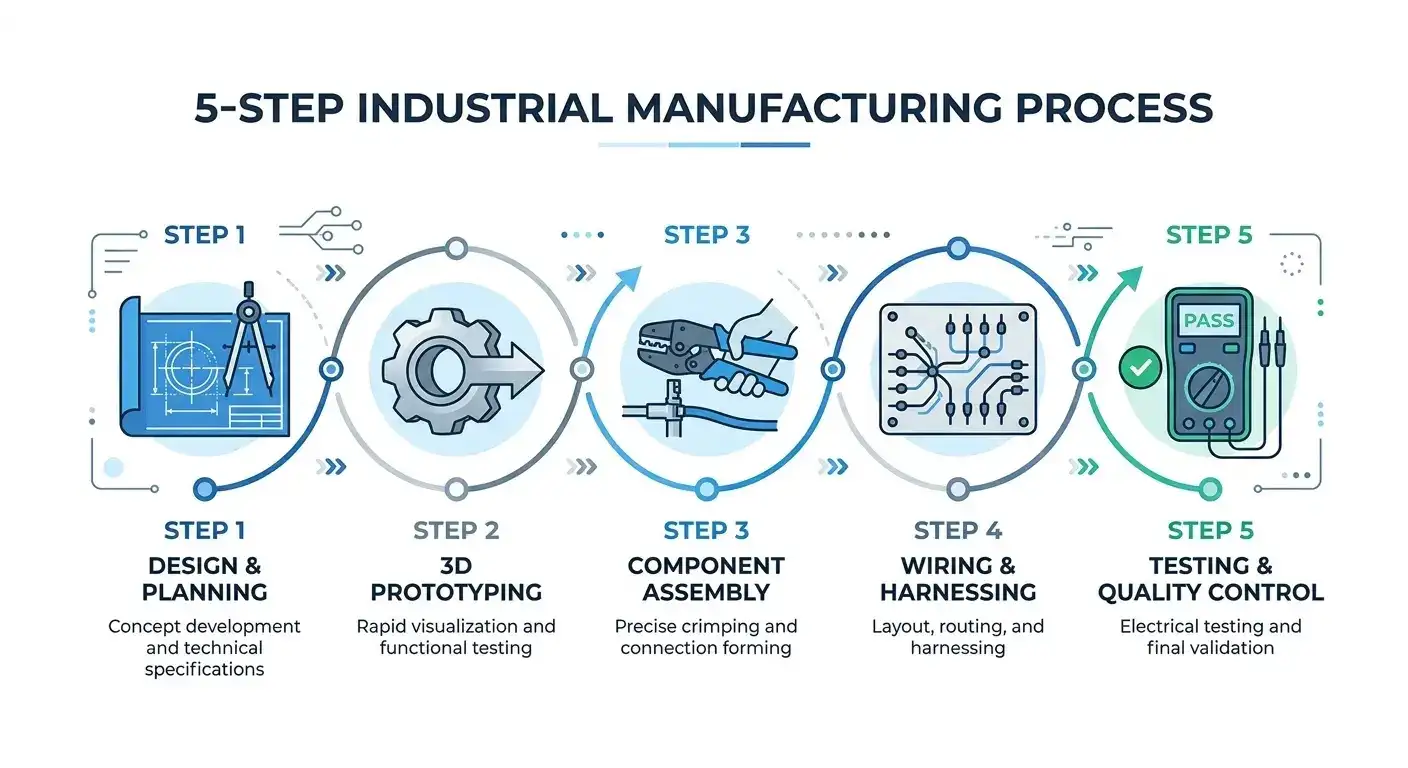
The process starts with the OEM's specifications: circuit diagrams, connector preferences, routing paths, and environmental conditions inside the appliance. Engineers then convert these into harness drawings and bills of materials, selecting suitable wires, terminals, and protective components as per UL, IEC, or customer standards.
Sample harnesses are built and installed in the actual appliance cabinet so engineers can verify cable lengths, clip positions, bend radii, and connector orientations before bulk production. This step prevents the classic "five‑millimetre‑short" problem that every production engineer has seen at least once. When the prototype fits comfortably and passes functional checks, the design moves to validation.
In mass production, wires are cut and stripped to precise lengths using semi‑automatic or fully automatic machines. Terminals are crimped with calibrated tools so the mechanical pull‑out strength and electrical contact resistance fall within the manufacturer's recommended window. Crimp quality is critical; poor crimps cause hot spots and intermittent faults. Reputable manufacturers maintain crimp cross‑sections, pull‑test logs, and tool maintenance records as part of their quality system.
Operators then assemble all wires according to the harness board or jig, routing them through sleeves, clips, and ties. This creates the final shape that will drop into the appliance exactly the same way each time, which reduces assembly time on the OEM line. Proper bundling avoids cable damage and ensures that power, signal, and earth wires maintain suitable separation, which supports EMC performance and safety.
Before dispatch, serious manufacturers test every harness for continuity and insulation resistance. This helps catch mis‑wirings, loose crimps, and insulation faults before the harness reaches the OEM's line. Harness Techniques highlights continuity, pull‑out, insulation resistance, and visual inspection as part of its quality checks for harness assemblies. For OEMs, this means lower rework rates and more predictable line performance.
Modern appliances operate under strict safety regulations, especially when they are exported to markets that enforce UL, IEC, and RoHS guidelines. An appliance wiring harness manufacturer in India that understands these frameworks makes life easier for design and compliance teams.
UL and IEC standards set requirements for conductor sizing, insulation performance, temperature ratings, and flammability. UL’s wire and cable application guides explain how certified wires must match the intended installation, temperature, and voltage environment. Appliance cables often follow UL 758 or related categories forAppliance Wiring Material (AWM) , which define insulation and construction requirements. IEC standards, such as those for appliance inlets and connectors, specify creepage distances, clearances, and other safety parameters for mains‑connected parts.
RoHS (Restriction of Hazardous Substances) restricts the use of certain substances like lead, mercury, cadmium, and hexavalent chromium in electrical and electronic products. RoHS‑compliant cables and harnesses rely on insulation and components that avoid these restricted substances while still meeting mechanical and electrical requirements. Harness Techniques notes that it can supply harnesses using UL‑approved wires and RoHS‑compliant materials, which supports OEM export and regulatory needs. For brands building long‑term trust, this combination of safety and environmental responsibility is no longer optional; it is expected by global buyers.
Some buyers try to fit generic harnesses into multiple appliance models to save cost. In practice, custom harnesses usually reduce total cost of ownership because they cut assembly time through exact lengths and connector orientations, reduce field failures caused by stress, abrasion, or loose terminations, and simplify troubleshooting thanks to logical routing and identification.
Harness Techniques positions itself as a custom OEM partner, offering tailored lengths, gauges, connector options, sleeving, and terminal configurations based on each customer's design. The company also supports prototype development and design refinement, which helps OEMs optimise both material cost and performance over time.
| Attribute | Custom OEM Harness | Generic Harness |
|---|---|---|
| Assembly Time on OEM Line | ✔ Reduced — exact lengths & connector orientations | ✘ More trimming & adjustment needed |
| Field Failure Rate | ✔ Lower — designed for specific stress conditions | ✘ Higher risk of stress, abrasion & loose termination faults |
| Troubleshooting Ease | ✔ Logical routing & identification simplifies fault-finding | ✘ Generic labelling causes confusion during service |
| Compliance Coverage | ✔ UL, IEC & RoHS aligned by design | ✘ May not match specific market requirements |
| Prototype & Design Support | ✔ Full OEM collaboration available | ✘ Off-the-shelf only — no customisation possible |
| Long-Term Cost of Ownership | ✔ Lower — fewer service calls & rework | ✘ Higher warranty & field service costs over time |
For OEMs, choosing a wiring harness partner is not only about price per piece. Factors like engineering support, documentation, and long‑term reliability usually matter more over the life of the programme.
Harness Techniques (I) Pvt. Ltd. brings several advantages as an appliance wiring harness manufacturer in India:
Specialisation in wiring harness design and execution for appliances and electrical applications
Ability to provide custom appliance wiring harnesses with UL‑approved wires and RoHS‑compliant options.
Use of structured processes including prototyping, jig‑based assembly, and 100% testing for continuity and insulation resistance
Experience supplying OEMs in India with wiring harnesses and assemblies through marketplace and direct channels
When these strengths align with an OEM’s design and quality expectations, the result is a stable, long‑term sourcing relationship rather than constant vendor churn.
If you currently source harnesses or plan a new appliance line, a simple evaluation checklist can help. Harness Techniques checks several of these boxes through its appliance wiring harness offering, material options, and quality practices.
Harness Techniques checks several of these boxes through its appliance wiring harness offering, material options, and quality practices
The wiring harness may not appear in your marketing brochures, but it quietly decides how many service calls your product generates. Partnering with a specialised appliance wiring harness manufacturer in India that understands standards, testing, and OEM realities gives your brand a real competitive edge.
Harness Techniques (I) Pvt. Ltd. offers reliable, custom appliance wiring harness solutions backed by structured manufacturing and quality control, making it a strong candidate for OEMs seeking long‑term, compliant sourcing.
To explore options or request a custom design, OEM buyers can review the appliance wire harness page and share their application details for a tailored proposal.
The wiring harness quietly decides how many service calls your product generates. Get reliable, custom appliance wiring harness solutions backed by structured manufacturing and quality control.
Request a Custom Design →